About

I study how networks can anticipate the traffic they carry — wireless traffic prediction, networking for AI, and AI for networking.

I am an associate professor at the Institute of Intelligent Communication Technologies, Shandong University. Before joining SDU, I was a Senior Research Associate at the University of Bristol, working with Prof. Mark A. Beach, and a Postdoctoral Research Fellow at King Abdullah University of Science and Technology (KAUST), working with Prof. Mohamed-Slim Alouini and Prof. Basem Shihada. I received my Ph.D. in communication and information systems from Shandong University, Jinan, China, in 2019.

Prospective students

I am looking for strong and motivated students to work with on wireless traffic prediction, networking for AI, and intelligent networks. If you are interested in working with me, please send me an email.

Research

  1. Wireless traffic prediction

    Prediction for green communications, under centralised learning, decentralised learning, and large foundation models.

  2. Networking for AI

    Networking in support of AI, particularly for large foundation models.

  3. AI for networking

    AI algorithms for distributed, autonomous networks.

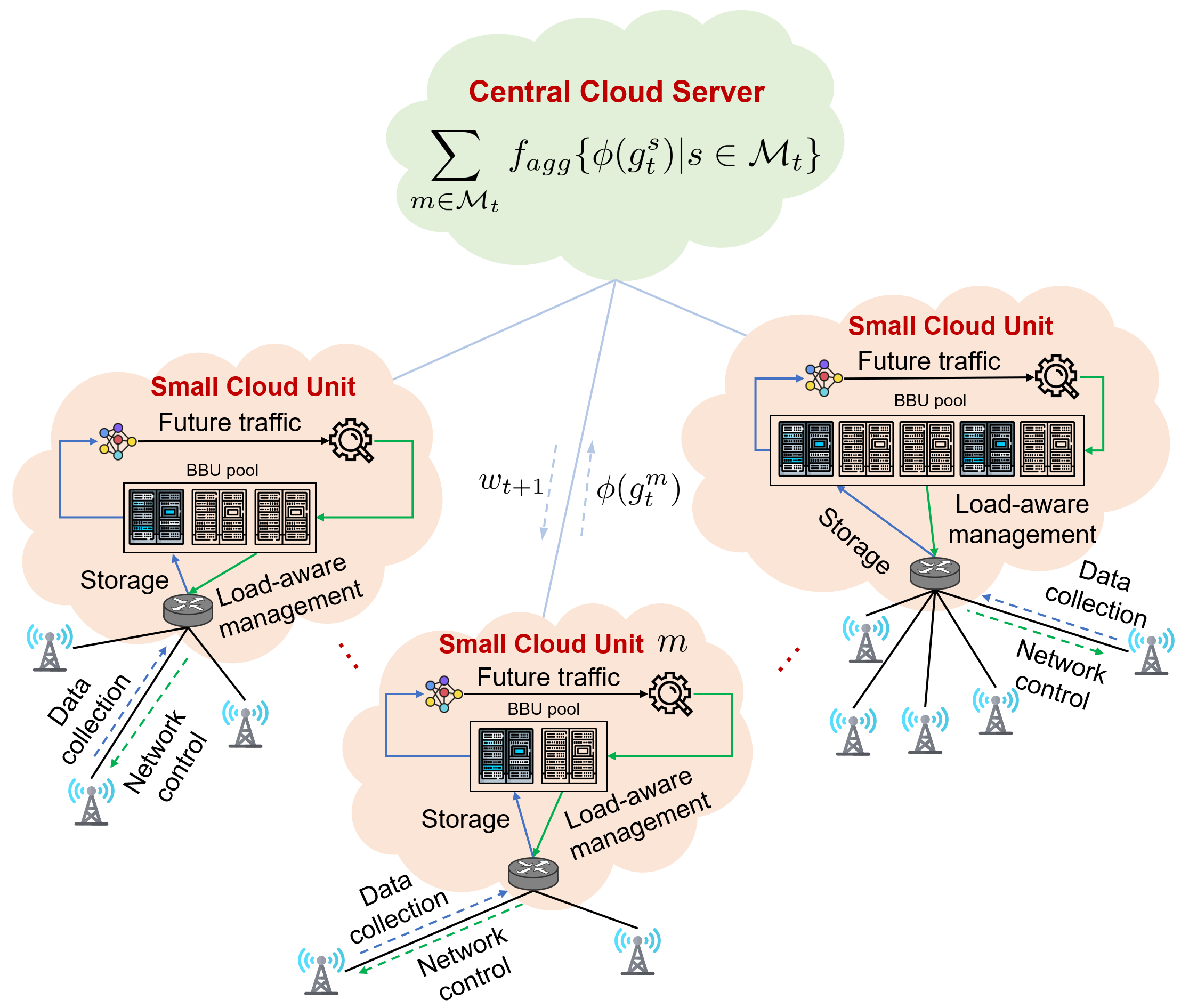
Some example problems we are tackling

Talks

  1. Aug 2025
    LLM-Based Wireless Traffic Prediction for Intelligent Networks
    6th Information Communication Technologies Conference (ICTC) · Nanjing
  2. Nov 2024
    Wireless Traffic Prediction and Remote Training
    Second Huawei Young Scholars Workshop, Data Communication Session · Suzhou
  3. Nov 2024
    AI and New Generation of Information Technologies
    2024 World Robot Contest Trials (Shandong) & ENJOYAI · Zhangqiu
  4. Oct 2024
    Wireless Traffic Prediction in the Era of LLMs Tutorial
    2024 IEEE 24th International Conference on Communication Technology (ICCT) · Chengdu
  5. Oct 2024
    Wireless Traffic Prediction via Cloud-Edge Federated Collaboration
    Huawei · Shenzhen
  6. 2023
    Federated Radio Frequency Fingerprinting with Model Transfer and Adaptation
    IEEE INFOCOM 2023
  7. 2022
    Wireless Traffic Analysis: From Centralized Learning to Federated Learning
    University of Bristol
  8. 2021
    Graph Neural Networks Empowered Origin-Destination Learning for Urban Traffic Prediction
    KAUST Conference on Artificial Intelligence
  9. 2021
    Dual Attention-Based Federated Learning for Wireless Traffic Prediction
    IEEE INFOCOM 2021
  10. 2016
    Deep Learning Based Link Prediction with Social Pattern and External Attribute Knowledge in Bibliographic Networks
    IEEE SmartData 2016
  11. 2015
    Fast Fine-Grained Air Quality Index Level Prediction Using Random Forest Algorithm on Cluster Computing of Spark
    IEEE CBDCom 2015

Publications

Selected

IEEE JSAC 2019

Deep Transfer Learning for Intelligent Cellular Traffic Prediction Based on Cross-Domain Big Data

C. Zhang, H. Zhang, J. Qiao, D. Yuan, M. Zhang

IEEE Journal on Selected Areas in Communications, vol. 37, no. 6, pp. 1389–1401, June 2019

Top-10 most popular article in IEEE JSAC for several years
Code Slides Data Code Ocean

Machine (deep) learning-enabled accurate traffic modeling and prediction is an indispensable part for future big data-driven intelligent cellular networks, since it can help autonomic network control and management as well as service provisioning. Along this line, this paper proposes a novel deep learning architecture, namely Spatial–Temporal Cross-domain neural Network (STCNet), to effectively capture the complex patterns hidden in cellular data. By adopting a convolutional long short-term memory network as its subcomponent, STCNet has a strong ability in modeling spatial–temporal dependencies. Besides, three kinds of cross-domain datasets are actively collected and modeled by STCNet to capture the external factors that affect traffic generation. As diversity and similarity coexist among cellular traffic from different city functional zones, a clustering algorithm is put forward to segment city areas into different groups, and consequently, a successive inter-cluster transfer learning strategy is designed to enhance knowledge reuse. In addition, the knowledge transferring among different kinds of cellular traffic is also explored with the proposed STCNet model. The effectiveness of STCNet is validated through real-world cellular traffic datasets using three kinds of evaluation metrics. The experimental results demonstrate that STCNet outperforms the state-of-the-art algorithms. In particular, the transfer learning based on STCNet brings about 4%~13% extra performance improvements.

@ARTICLE{chuanting2019jsac,
  author={Zhang, Chuanting and Zhang, Haixia and Qiao, Jingping and Yuan, Dongfeng and Zhang, Minggao},
  journal={IEEE Journal on Selected Areas in Communications},
  title={Deep Transfer Learning for Intelligent Cellular Traffic Prediction Based on Cross-Domain Big Data},
  year={2019},
  volume={37},
  number={6},
  pages={1389-1401},
  keywords={Predictive models;Correlation;Deep learning;Urban areas;Big Data;Wireless communication;Spatiotemporal phenomena;Cellular traffic prediction;big data;deep learning;intelligent traffic management},
  doi={10.1109/JSAC.2019.2904363}
 }
IEEE TCCN 2024

Gradient Compression and Correlation Driven Federated Learning for Wireless Traffic Prediction

C. Zhang, H. Zhang, S. Dang, B. Shihada, M.-S. Alouini

IEEE Transactions on Cognitive Communications and Networking

Code Slides Data Code Ocean

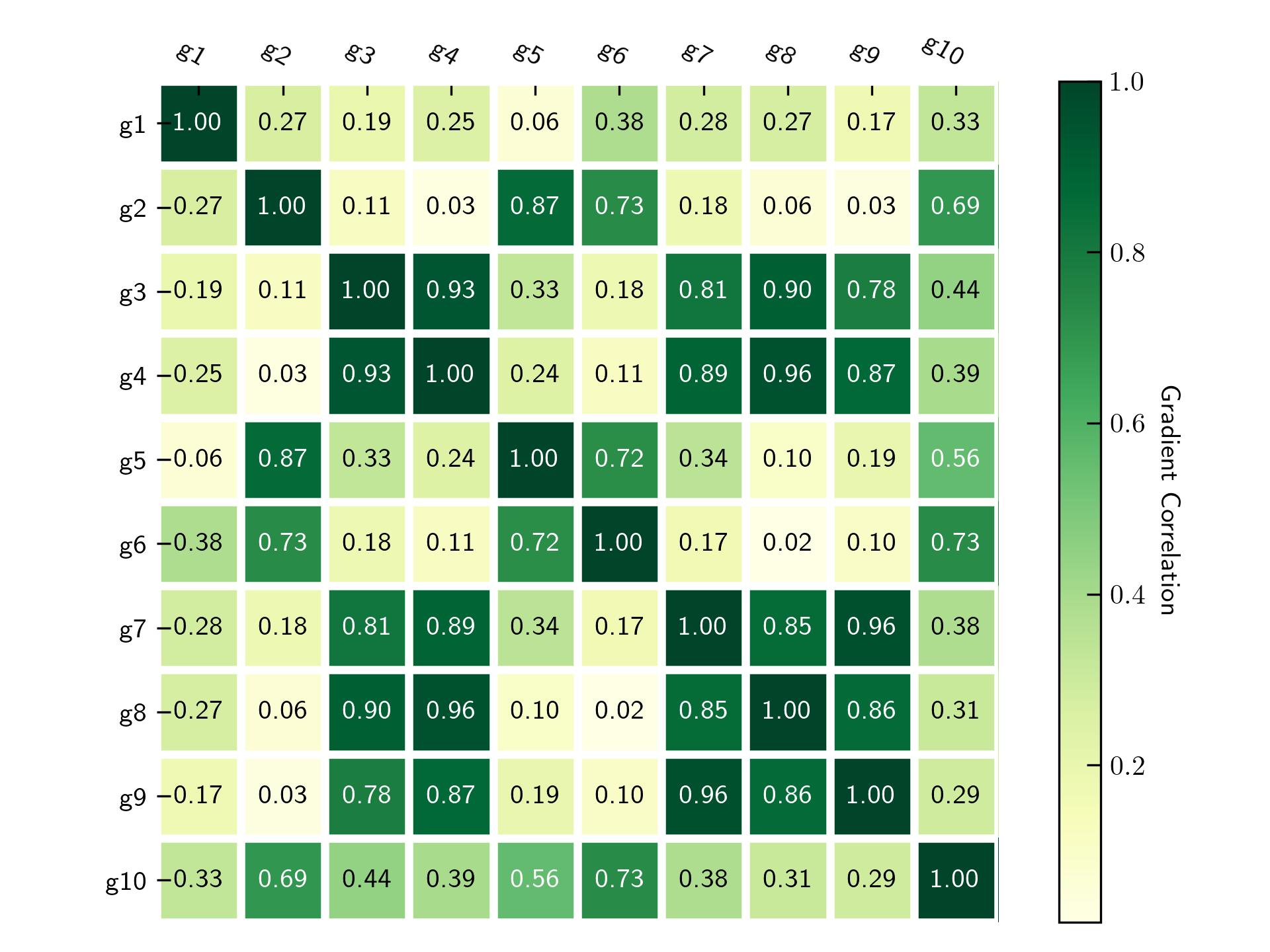
Wireless traffic prediction plays an indispensable role in cellular networks to achieve proactive adaptation for communication systems. Along this line, Federated Learning (FL)-based wireless traffic prediction at the edge attracts enormous attention because of the exemption from raw data transmission and enhanced privacy protection. However FL-based wireless traffic prediction methods still rely on heavy data transmissions between local clients and the server for local model updates. Besides, how to model the spatial dependencies of local clients under the framework of FL remains uncertain. To tackle this, we propose an innovative FL algorithm that employs gradient compression and correlation-driven techniques, effectively minimizing data transmission load while preserving prediction accuracy. Our approach begins with the introduction of gradient sparsification in wireless traffic prediction, allowing for significant data compression during model training. We then implement error feedback and gradient tracking methods to mitigate any performance degradation resulting from this compression. Moreover, we develop three tailored model aggregation strategies anchored in gradient correlation, enabling the capture of spatial dependencies across diverse clients. Experiments have been done with two real-world datasets and the results demonstrate that by capturing the spatio-temporal characteristics and correlation among local clients, the proposed algorithm outperforms the state-of-the-art algorithms and can increase the communication efficiency by up to two orders of magnitude without losing prediction accuracy.

@ARTICLE{chuanting2024tccn,
  author={Zhang, Chuanting and Zhang, Haixia and Dang, Shuping and Shihada, Basem and Alouini, Mohamed-Slim},
  journal={IEEE Transactions on Cognitive Communications and Networking},
  title={Gradient Compression and Correlation Driven Federated Learning for Wireless Traffic Prediction},
  year={2024},
  volume={},
  number={},
  pages={1-1},
  keywords={Wireless communication;Predictive models;Servers;Prediction algorithms;Training;Correlation;Data communication;Federated learning;Traffic control;Heuristic algorithms;Wireless traffic prediction;gradient compression;federated learning;intelligent networks},
  doi={10.1109/TCCN.2024.3524183}
}
CAAI TIT 2025

Graph Neural Networks Empowered Origin-Destination Learning for Urban Traffic Prediction

C. Zhang, G. Ma, L. Zhang, B. Shihada

CAAI Transactions on Intelligence Technology, vol. 10, no. 4, pp. 1062–1076, 2025

Slides

Urban traffic prediction with high precision is always the unremitting pursuit of intelligent transportation systems and is instrumental in bringing smart cities into reality. The fundamental challenges for traffic prediction lie in the accurate modelling of spatial and temporal traffic dynamics. Existing approaches mainly focus on modelling the traffic data itself, but do not explore the traffic correlations implicit in origin-destination (OD) data. In this paper, we propose STOD-Net, a dynamic spatial-temporal OD feature-enhanced deep network, to simultaneously predict the in-traffic and out-traffic for each and every region of a city. We model the OD data as dynamic graphs and adopt graph neural networks in STOD-Net to learn a low-dimensional representation for each region. As per the region feature, we design a gating mechanism and operate it on the traffic feature learning to explicitly capture spatial correlations. To further capture the complicated spatial and temporal dependencies among different regions, we propose a novel joint feature, learning block in STOD-Net and transfer the hybrid OD features to each block to make the learning process spatiotemporal-aware. We evaluate the effectiveness of STOD-Net on two benchmark datasets, and experimental results demonstrate that it outperforms the state-of-the-art by approximately 5% in terms of prediction accuracy and considerably improves prediction stability up to 80% in terms of standard deviation.

@article{https://doi.org/10.1049/cit2.70021,
author = {Zhang, Chuanting and Ma, Guoqing and Zhang, Liang and Shihada, Basem},
title = {Graph Neural Networks Empowered Origin-Destination Learning for Urban Traffic Prediction},
journal = {CAAI Transactions on Intelligence Technology},
volume = {10},
number = {4},
pages = {1062-1076},
keywords = {deep neural networks, origin-destination learning, spatial-temporal modeling, traffic prediction},
doi = {https://doi.org/10.1049/cit2.70021},
url = {https://ietresearch.onlinelibrary.wiley.com/doi/abs/10.1049/cit2.70021},
eprint = {https://ietresearch.onlinelibrary.wiley.com/doi/pdf/10.1049/cit2.70021},
year = {2025}
}
IEEE INFOCOM 2021

Dual Attention-Based Federated Learning for Wireless Traffic Prediction

C. Zhang, S. Dang, B. Shihada, M.-S. Alouini

IEEE INFOCOM, pp. 1–10, 2021

Top-5 most popular paper

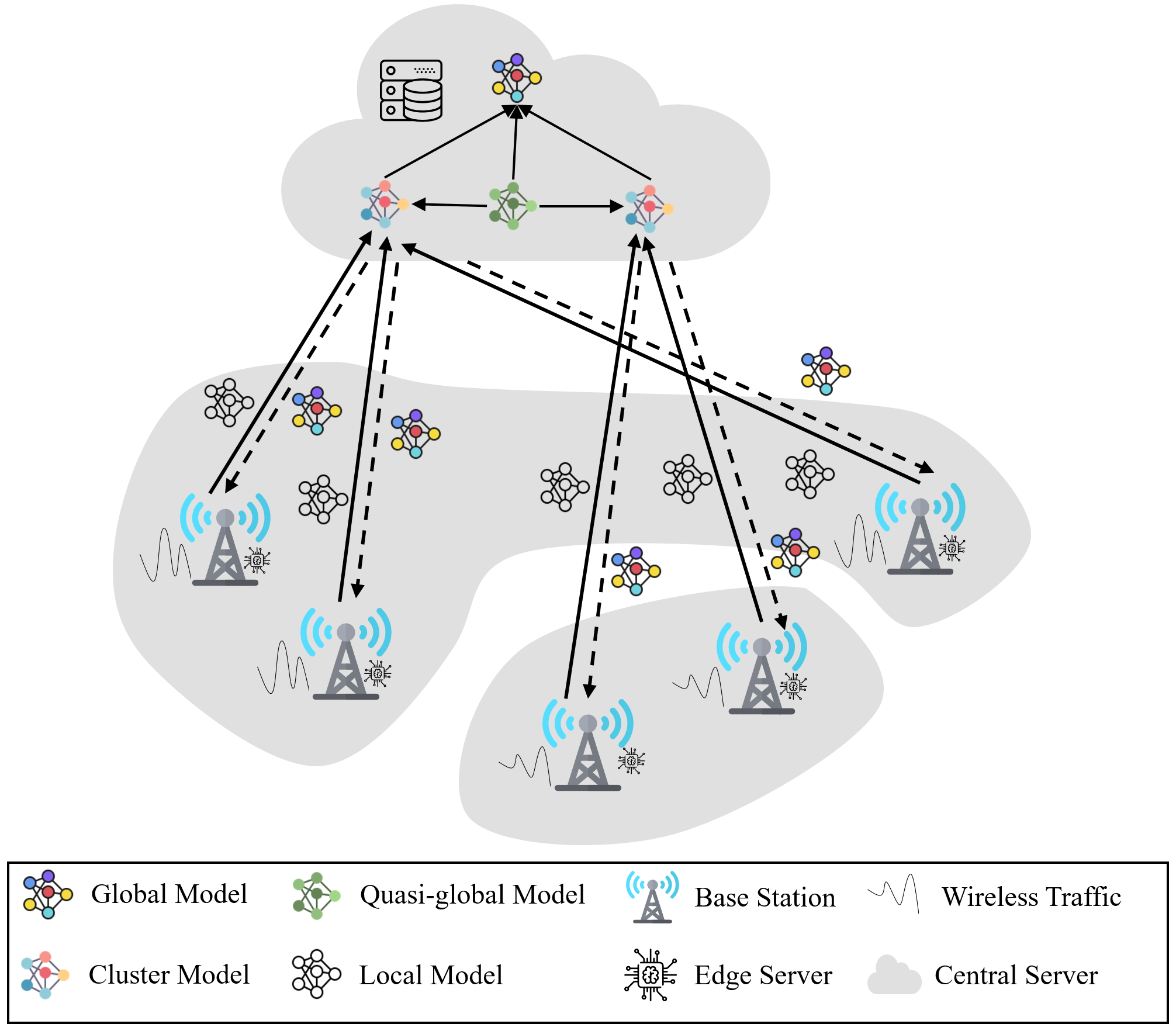
Wireless traffic prediction is essential for cellular networks to realize intelligent network operations, such as load-aware resource management and predictive control. Existing prediction approaches usually adopt centralized training architectures and require the transferring of huge amounts of traffic data, which may raise delay and privacy concerns for certain scenarios. In this work, we propose a novel wireless traffic prediction framework named Dual Attention-Based Federated Learning (FedDA), by which a high-quality prediction model is trained collaboratively by multiple edge clients. To simultaneously capture the various wireless traffic patterns and keep raw data locally, FedDA first groups the clients into different clusters by using a small augmentation dataset. Then, a quasi-global model is trained and shared among clients as prior knowledge, aiming to solve the statistical heterogeneity challenge confronted with federated learning. To construct the global model, a dual attention scheme is further proposed by aggregating the intra-and inter-cluster models, instead of simply averaging the weights of local models. We conduct extensive experiments on two real-world wireless traffic datasets and results show that FedDA outperforms state-of-the-art methods. The average mean squared error performance gains on the two datasets are up to 10% and 30%, respectively.

@INPROCEEDINGS{chuanting2021infocom,
  author={Zhang, Chuanting and Dang, Shuping and Shihada, Basem and Alouini, Mohamed-Slim},
  booktitle={IEEE INFOCOM 2021 - IEEE Conference on Computer Communications},
  title={Dual Attention-Based Federated Learning for Wireless Traffic Prediction},
  year={2021},
  volume={},
  number={},
  pages={1-10},
  keywords={Wireless communication;Training;Computational modeling;Traffic control;Predictive models;Performance gain;Collaborative work;wireless traffic prediction;federated learning;deep neural networks},
  doi={10.1109/INFOCOM42981.2021.9488883}
 }
IEEE Commun. Lett. 2018

Citywide Cellular Traffic Prediction Based on Densely Connected Convolutional Neural Networks

C. Zhang, H. Zhang, D. Yuan, M. Zhang

IEEE Communications Letters, vol. 22, no. 8, pp. 1656–1659, Aug. 2018

Top-50 most popular article in IEEE Communications Letters
Code Slides Code Ocean

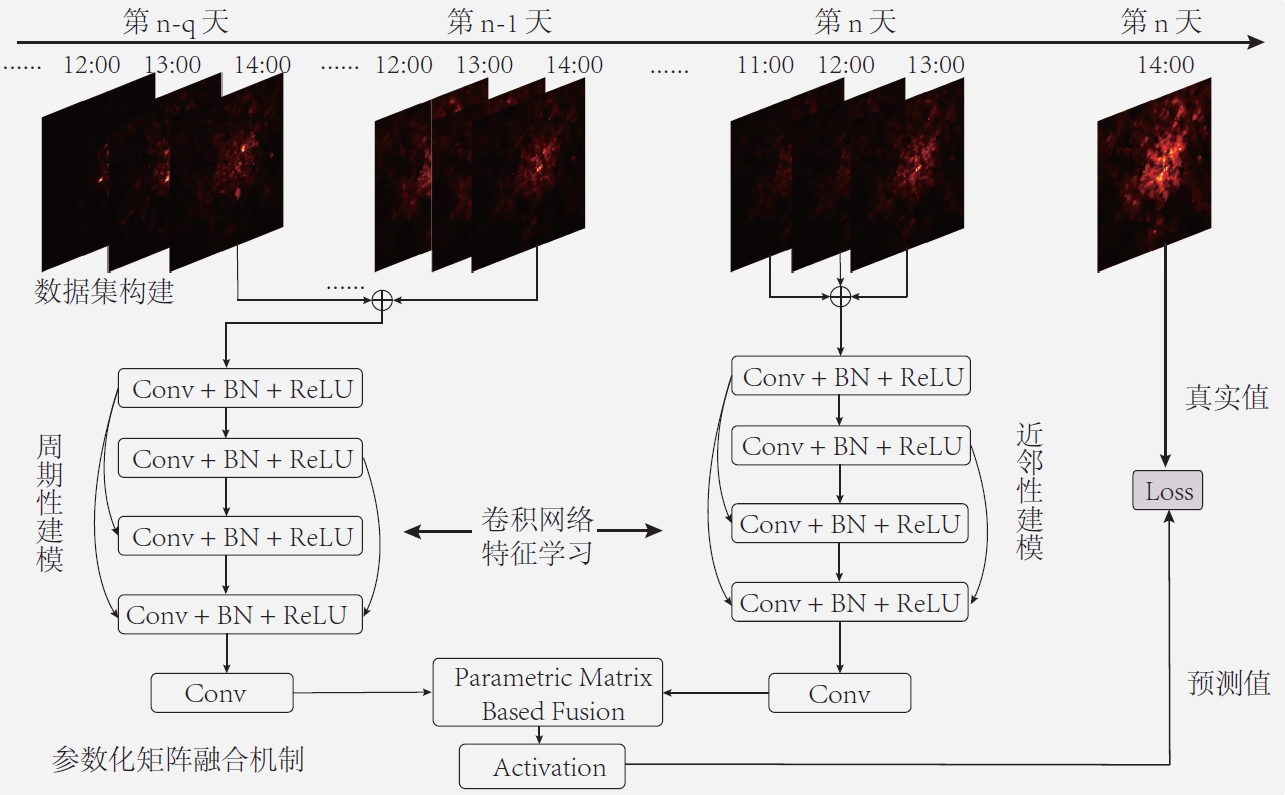
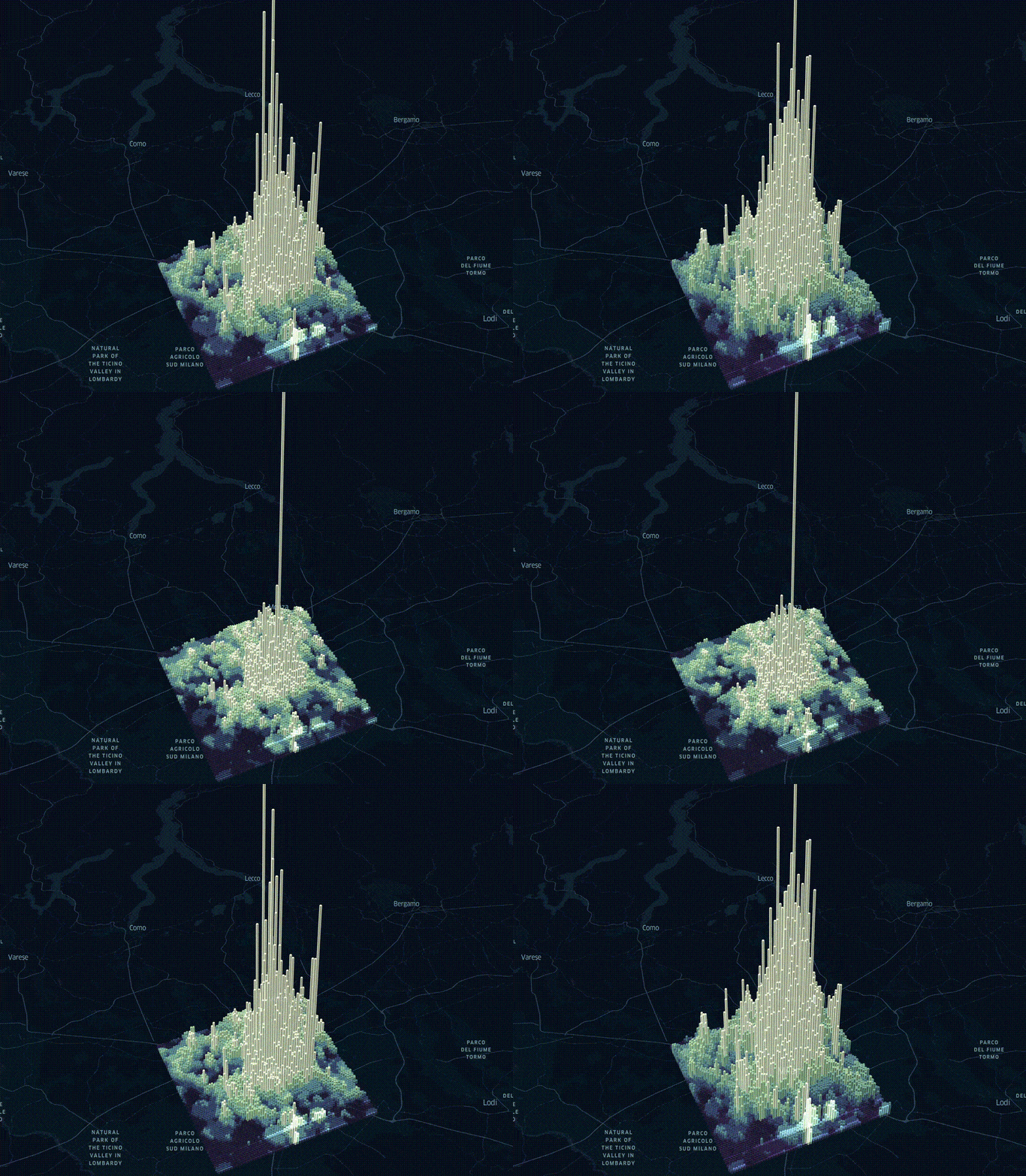
With accurate traffic prediction, future cellular networks can make self-management and embrace intelligent and efficient automation. This letter devotes itself to citywide cellular traffic prediction and proposes a deep learning approach to model the nonlinear dynamics of wireless traffic. By treating traffic data as images, both the spatial and temporal dependence of cell traffic are well captured utilizing densely connected convolutional neural networks. A parametric matrix based fusion scheme is further put forward to learn influence degrees of the spatial and temporal dependence. Experimental results show that the prediction performance in terms of root mean square error can be significantly improved compared with those existing algorithms. The prediction accuracy is also validated by using the data sets of Telecom Italia.

@ARTICLE{zhang2018cl,
  author={Zhang, Chuanting and Zhang, Haixia and Yuan, Dongfeng and Zhang, Minggao},
  journal={IEEE Communications Letters},
  title={Citywide Cellular Traffic Prediction Based on Densely Connected Convolutional Neural Networks},
  year={2018},
  volume={22},
  number={8},
  pages={1656-1659},
  keywords={Computer architecture;Microprocessors;Wireless communication;Correlation;Predictive models;Convolution;Machine learning;Cellular traffic prediction;big data;deep learning;intelligent traffic management},
  doi={10.1109/LCOMM.2018.2841832}
 }
IEEE WCL 2021

On Telecommunication Service Imbalance and Infrastructure Resource Deployment

C. Zhang, S. Dang, B. Shihada, M.-S. Alouini

IEEE Wireless Communications Letters, vol. 10, no. 10, pp. 2125–2129, Oct. 2021

Code Slides Project site

The digital divide restricting the access of people living in developing areas to the benefits of modern information and communications technologies has become a major challenge and research focus. To well understand and finally bridge the digital divide, we first need to discover a proper measure to characterize and quantify the telecommunication service imbalance. In this regard, we propose a fine-grained and easy-to-compute imbalance index, aiming to quantitatively link the relation among telecommunication service imbalance, telecommunication infrastructure, and demographic distribution. The mathematically elegant and generic form of the imbalance index allows consistent analyses for heterogeneous scenarios and can be easily tailored to incorporate different telecommunication policies and application scenarios. Based on this index, we also propose an infrastructure resource deployment strategy by minimizing the average imbalance index of any geographical segment. Experimental results verify the effectiveness of the proposed imbalance index by showing a high degree of correlation to existing congeneric but coarse-grained measures and the superiority of the infrastructure resource deployment strategy.

@ARTICLE{zhang2021wcl,
  author={Zhang, Chuanting and Dang, Shuping and Shihada, Basem and Alouini, Mohamed-Slim},
  journal={IEEE Wireless Communications Letters},
  title={On Telecommunication Service Imbalance and Infrastructure Resource Deployment},
  year={2021},
  volume={10},
  number={10},
  pages={2125-2129},
  keywords={Indexes;Communications technology;Telecommunication services;Digital divide;Optimization;Visualization;STEM;Telecommunication service imbalance;infrastructure resource deployment;digital divide;global connectivity},
  doi={10.1109/LWC.2021.3094866}
  }
IEEE SmartData 2016

Deep Learning Based Link Prediction with Social Pattern and External Attribute Knowledge in Bibliographic Networks

C. Zhang, H. Zhang, D. Yuan, M. Zhang

IEEE Smart Data (SmartData), pp. 815–821, 2016

Best Paper Award
Code Slides Award photo

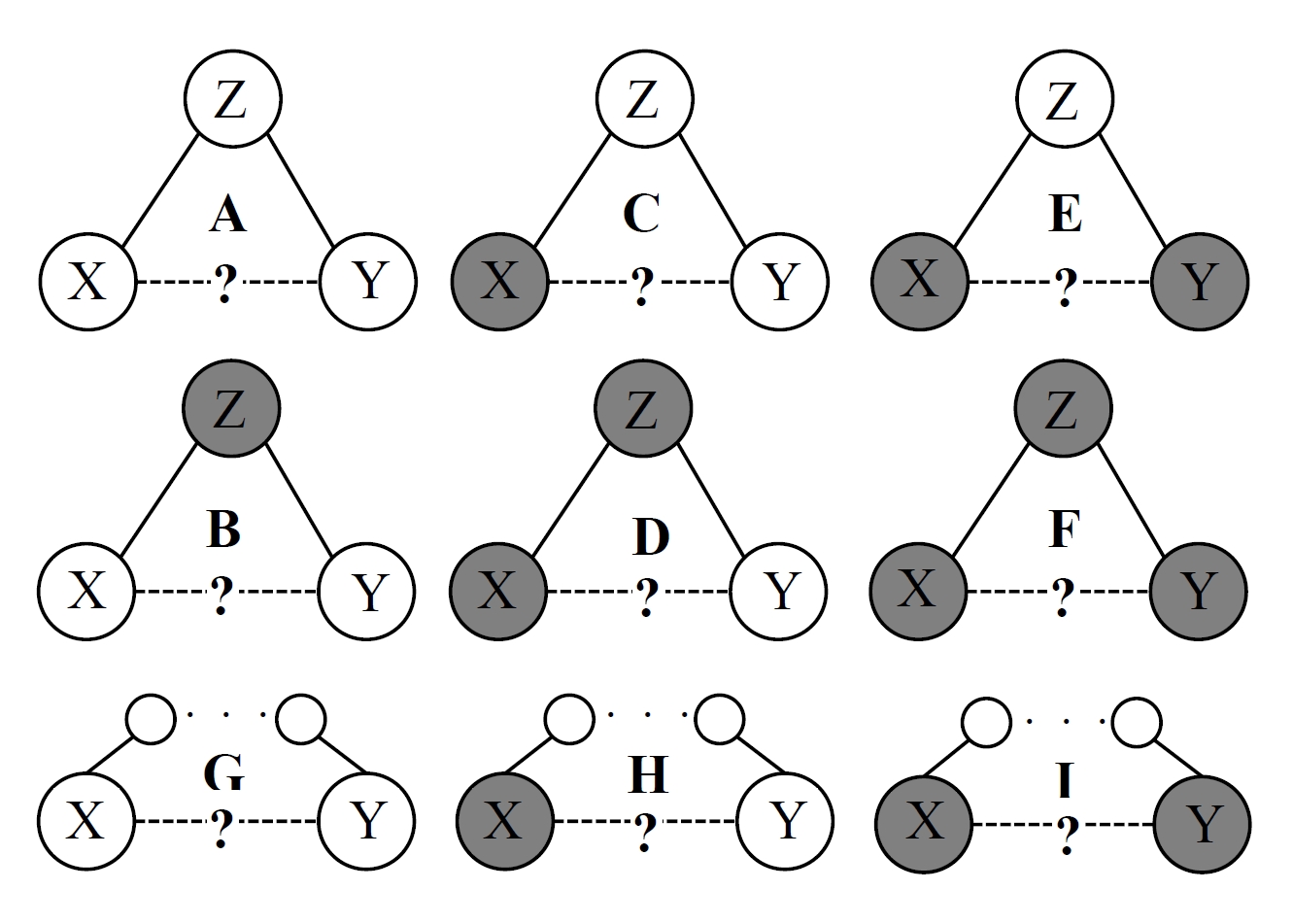
The problem of predicting links for information entities is an important task in network analysis. In this regard, link prediction between authors in bibliographic networks has attracted much attention. However, most of these works only center around exploiting network topology features to do prediction, and other factors affecting link formation are rarely considered. In this paper, we introduce two kinds of novel features based on social pattern and external attribute knowledge (SPEAK), then integrate the SPEAK features and topological features into a deep learning framework using deep neural networks (DNNs). We present the performance based on a real world academic social network from AMiner. Experimental results demonstrate that the SPEAK features can significantly boost the link prediction performance especially when potential links span large geodesic distance. In addition, these features are helpful in understanding the mechanisms behind the link formation.

@INPROCEEDINGS{zhang2016speak,
  author={Zhang, Chuanting and Zhang, Haixia and Yuan, Dongfeng and Zhang, Minggao},
  booktitle={2016 IEEE International Conference on Internet of Things (iThings) and IEEE Green Computing and Communications (GreenCom) and IEEE Cyber, Physical and Social Computing (CPSCom) and IEEE Smart Data (SmartData)},
  title={Deep Learning Based Link Prediction with Social Pattern and External Attribute Knowledge in Bibliographic Networks},
  year={2016},
  volume={},
  number={},
  pages={815-821},
  keywords={Feature extraction;Network topology;Machine learning;Predictive models;Data models;Collaboration;Knowledge engineering},
  doi={10.1109/iThings-GreenCom-CPSCom-SmartData.2016.170}
 }

More publications

2024
Mathematics 2024

Communication-Efficient Wireless Traffic Prediction with Federated Learning

F. Gao, C. Zhang*, J. Qiao, K. Li, Y. Cao

Mathematics, vol. 12, no. 16, art. 2539, Aug. 2024

Wireless traffic prediction is essential to developing intelligent communication networks that facilitate efficient resource allocation. Along this line, decentralized wireless traffic prediction under the paradigm of federated learning is becoming increasingly significant. Compared to traditional centralized learning, federated learning satisfies network operators’ requirements for sensitive data protection and reduces the consumption of network resources. In this paper, we propose a novel communication-efficient federated learning framework, named FedCE, by developing a gradient compression scheme and an adaptive aggregation strategy for wireless traffic prediction. FedCE achieves gradient compression through top-K sparsification and can largely relieve the communication burdens between local clients and the central server, making it communication-efficient. An adaptive aggregation strategy is designed by quantifying the different contributions of local models to the global model, making FedCE aware of spatial dependencies among various local clients. We validate the effectiveness of FedCE on two real-world datasets. The results demonstrate that FedCE can improve prediction accuracy by approximately 27% with only 20% of communications in the baseline method.

@article{gao2024communication,
  title={Communication-Efficient Wireless Traffic Prediction with Federated Learning},
  author={Gao, Fuwei and Zhang, Chuanting and Qiao, Jingping and Li, Kaiqiang and Cao, Yi},
  journal={Mathematics},
  volume={12},
  number={16},
  pages={2539},
  year={2024},
  publisher={MDPI}
}
IEEE/CIC ICCC 2024

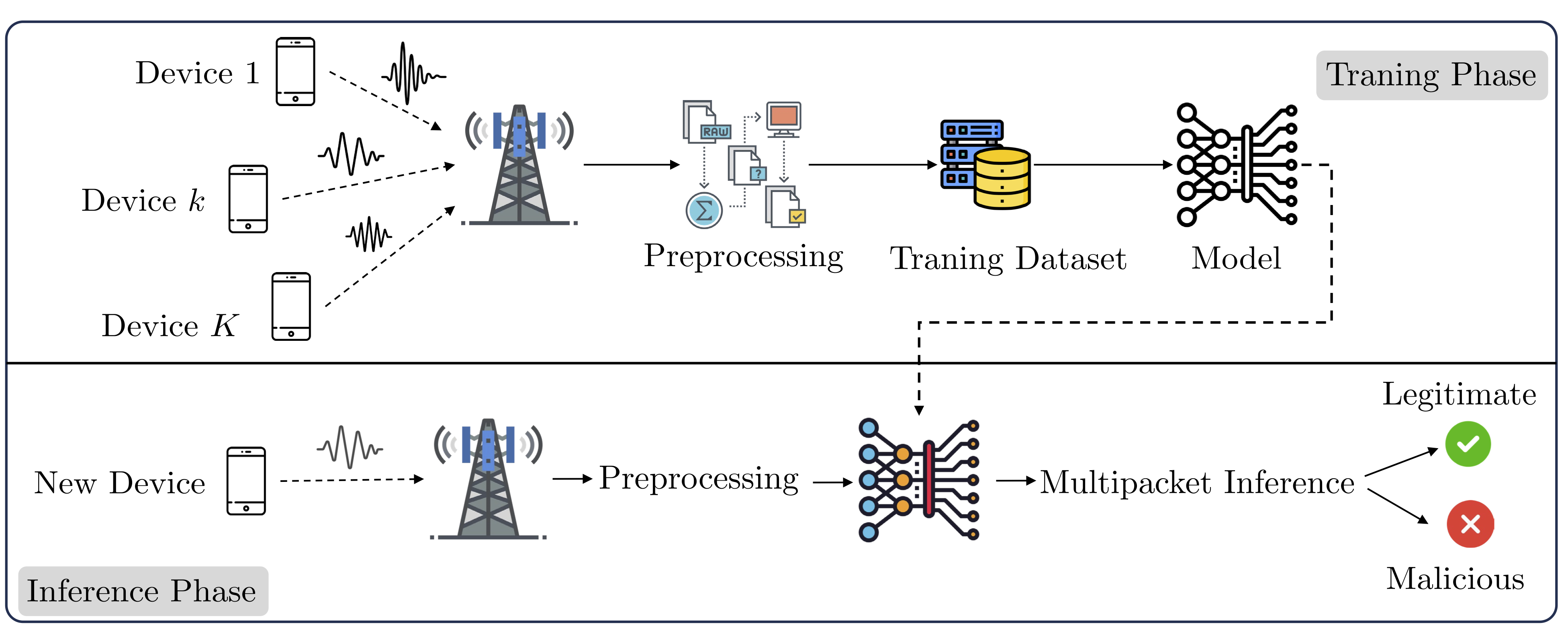
Radio Frequency Fingerprinting with Multi-Packet Adaptive Fusion

K. Li, J. Qiao, C. Zhang, H. Zhang

IEEE/CIC International Conference on Communications in China (ICCC)

Radio frequency fingerprinting (RFF), a critical technology for wireless device identification, plays a key role in network security and the Internet of Things (IoT). Due to the complex and resource-constrained working environments of IoT devices, noise is significant in RFF for IoT devices. Suppressing noise while maintaining radio fingerprint information presents a challenge. Multi-packet inference is a method aimed at reducing the impact of noise. In this paper, we propose a multi-packet adaptive fusion method, named MPAF, to enhance the RFF accuracy of IoT devices. This method dynamically adjusts the weights assigned to each data packet, thereby reducing the influence of highly interfered packets and improving the accuracy of the inference. To update the weights, we employ an adaptive weighted sum algorithm that updates weights iteratively, achieving a dynamic balance for each packet. This method, based on the error balancing algorithm, enables the system to adapt to new data features during continuous learning processes. To verify the effectiveness of our proposed approach, we conduct comprehensive experiments using real-world LoRa dataset, and the results indicate that our proposed MPAF method exhibits higher accuracy than traditional methods. Particularly, our proposed approach significantly improves classification accuracy under low signal-to-noise ratio conditions.

@INPROCEEDINGS{li2024iccc,
  author={Li, Kaiqiang and Qiao, Jingping and Zhang, Chuanting and Zhang, Haixia},
  booktitle={2024 IEEE/CIC International Conference on Communications in China (ICCC)},
  title={Radio Frequency Fingerprinting with Multi-Packet Adaptive Fusion},
  year={2024},
  volume={},
  number={},
  pages={1110-1115},
  keywords={Wireless communication;Accuracy;Heuristic algorithms;LoRa;Fingerprint recognition;Probability;Inference algorithms;Radio frequency fingerprinting;Internet of things;multi-packet inference;weighted fusion},
  doi={10.1109/ICCC62479.2024.10682034}
}

Full publication list on Google Scholar

Group

  • Photo of Wei Wang
    Wei Wang
    M.S. student · 2024–
  • Photo of Kaiqiang Li
    Kaiqiang Li
    M.S. student · 2022–
    co-advised with Prof. Qiao
  • Photo of Dongjiao Sun
    Dongjiao Sun
    M.S. student · 2023–
    co-advised with Prof. Qiao
  • Photo of Yu Zhang
    Yu Zhang
    M.S. student · 2024–
    co-advised with Prof. Qiao
  • Photo of Yinuo Tang
    Yinuo Tang
    M.S. student · 2024–
    co-advised with Prof. Qiao
  • Photo of Xiwei Li
    Xiwei Li
    M.S. student · 2024–
    co-advised with Prof. Qiao
  • Photo of Xiaoyu Jiang
    Xiaoyu Jiang
    Research assistant · 2024–
  • Photo of Ruining Wang
    Ruining Wang
    Research assistant · 2024–

Teaching

  • Software EngineeringFall 2023 · Fall 2024 · Fall 2025
  • Industrial Big Data Technologies and ApplicationsSpring 2024 · Spring 2025
  • Fundamentals of Artificial IntelligenceFall 2025

Service

Membership
  • IEEE Senior Member
  • ACM Member
  • CCF Member
  • CIE Member
Session Chair
  • IEEE ICCC 2024
  • IEEE SmartData 2016
TPC Member
  • IEEE GLOBECOM 2021–2024
  • IEEE ICCC 2017, 2021–2024
  • IEEE WCNC 2021–2024
  • IEEE VTC-Fall 2022
  • IEEE ComNet 2020
Reviewer
  • IEEE Transactions on Mobile Computing
  • IEEE Transactions on Knowledge and Data Engineering
  • IEEE Transactions on Services Computing
  • IEEE Transactions on Consumer Electronics
  • IEEE Transactions on Vehicular Technology
  • IEEE Communications Magazine
  • IEEE Wireless Communications Letters
  • Information Fusion

Honors & Awards

  1. 2024 IEEE ICCT Young Scientist Award
  2. 2020 Outstanding Doctoral Dissertation Award, Shandong Association for Artificial Intelligence
  3. 2020 Outstanding Doctoral Dissertation Award, Shandong Province
  4. 2016 Best Paper Award, IEEE SmartData
  5. 2016 First Prize Academic Scholarship, Shandong University
  6. 2015 First Prize Academic Scholarship, Shandong University

Resources